Hello friends. It’s me, Heather. Here to share a few words with you.
As Gallery & Public Art Director with the Greater Augusta Arts Council, I get to work closely with our local area artists who apply to our open calls. A few years ago I wrote a blog about Applying to shows. More recently I’ve written one about having a CV. Which I hope has helped some artists figure out the odds and ends of getting into a show. The front end of applying can be complicated, but so can the back end.
What do you do after you get into a show? Well, here are some pointers.
First things first, make sure your artwork is framed, wired, labeled and ready to hang from whatever hanging system the gallery has. If you aren’t sure what that system is, just ask. As a gallery person, I would much rather get the question ahead of hang day then try to trouble shoot with you the day of hanging when I have 50 other works to hang in addition to yours. Most times (and this definitely goes for my galleries) a gallery will let you know in the application or upon acceptance (or both) what the hanging system is. So, reading those documents and emails is pretty important.
If you are getting your work professionally framed, you can just let the framer know what hanging system its going on and let them handle it. If you are framing yourself, do the research or visit the gallery to get an idea.
If your work gets damaged ahead of the show, or sells, or is somehow no longer available – you need to let the gallery know ahead of hang day. I feel like this goes without saying, but I have had this happen so many times to me. The gallery is counting on your work. They selected it for a reason. So, if it won’t be there, you gotta let ’em know so they can shift things around or pull someone off the waitlist.
Definitely do not ghost your gallery.
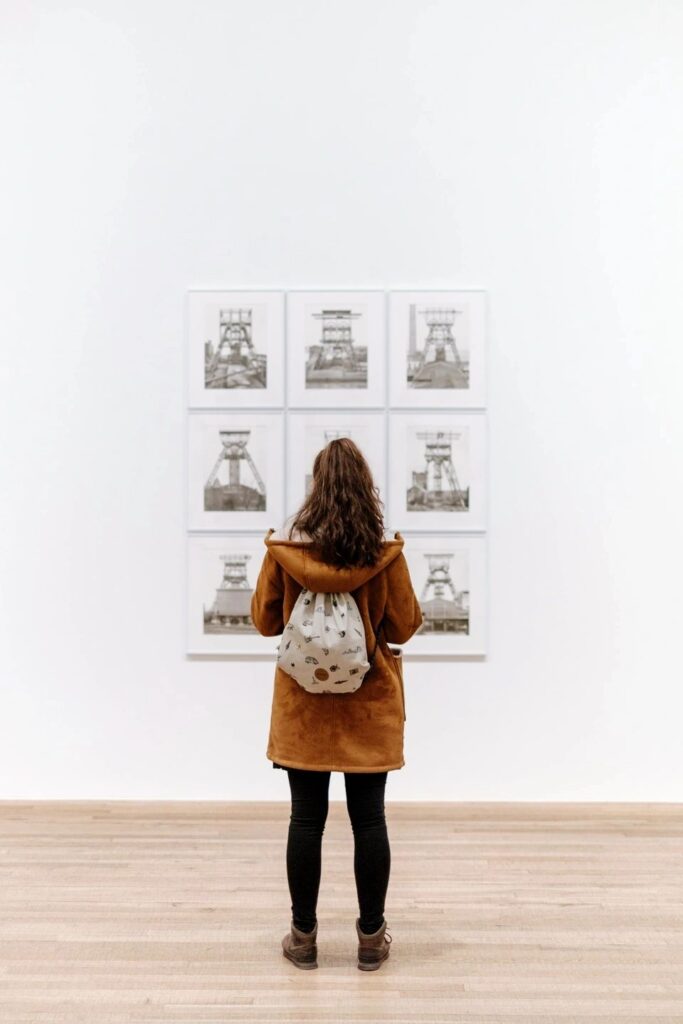
Second things second, you should arrive to drop off on time. Gallerists usually only have a set amount of time to prep and hang a show. If you are late, even by a few minutes, it throws the whole thing out of whack. It also makes you look unprofessional, which you never want to seem to the folks who are allowing you to show your work in their space. Think of it as showing up for your first day at a new job.
Your work should be labeled on the back with at the very least your name and the name of the artwork. Some of the most professional practices I have seen are when artists have a certificate of authenticity, or a printed inventory label with their info and the artwork info on the back. It never fails to impress me. But heck, I’ll take a sharpie on the canvas frame over nothing at all any day. You can’t rely on the gallery to know who you are and what your artwork looks like. Oftentimes there are interns, volunteers, or other staff involved in the hanging process outside of the curator. The curator may know off the top of their head which of your two near identical frog photos is “Jack” and which is “Jill,” but those other folks probably won’t.
If your work requires a special installation, you should also always plan to be on site or at the very least give very detailed instructions.
And third things third, after the show is up you should plan to help promote the show. Sharing the show on social media, inviting your friends, family and fans to check it out and/or attend the reception is super important. The gallery has a network that they should be inviting, and so do you. You are more likely to have a better turn out, and in turn better sales, if you are also promoting your work and the gallery its in. It takes a village to raise an art show.
For my own shows, I try to make it a point to share a press release at least 6 weeks ahead of install, and another 4 weeks ahead of the reception. I’ll make special posts in groups and event pages to keep folks interested. Then share the flyer, whether it’s on my permanent feed or stories on social media, on my website, or physically in person. All ahead of the opening, reception, and closing of the show. It’s a constant thing. The work doesn’t really stop for an artist after the artwork is finished and hung. And while, yes, the gallery has a responsibility to promote your work and your show, so do you as the artist.
Last things last, when the show is over and its time to come down… Please come get your artwork when the gallery needs you too. Oftentimes galleries don’t have a big store room and your artwork becomes a liability instead of a cool piece of art. You’d be surprised how many artists just completely abandon their unsold artwork once a show is over. The Arts Council has an “Abandoned Art Hall” full of sad little orphans whose parents forgot about them. For us, after 60 days the artwork becomes our property. We usually wind up donating them to charities around Augusta or add them to our permanent collection, if someone in the office likes it enough to hang in their space. We’d much rather give it back to the artist at the end of a show, however. So, if you can’t come at art pick-up, plan to send a trusted friend or family member to retrieve your artwork.
End the show with a final “thank you” to everyone who attended, the gallery, and everyone who helped make it happen. Then give yourself a nice pat on the back for a job well done and start prepping for the next event.
That’s the word. Keep making cool art and staying profesh, friends.
-Heather